
"El Salvador coffee profile"
200 article(s) found
Does Rosa Coffee Bean belong to Arabica? what kind of Panamanian Rosa Coffee Tree
Professional coffee knowledge exchange more coffee bean information please follow the coffee workshop (Wechat official account cafe_style) Qianjie Coffee-Rosa Coffee Variety profile first of all, Rosa is a variety, not a specific coffee name. A gene mutant belonging to the native species of Arabica, although Rosa

Porsa, Guatemala| Selected micro-batch Pakamara thematic report, global limit of 138 km
Huehuetenan go Guatemala Finca La Bolsa Guatemala Borsa Estate Producing area: Vivitenango Estate: Borsa Estate Altitude: 1500 m Variety: Pacamara Treatment: Wash 01| Guatemala borders Mexico in the north, El Salvador and Honduras in the south, and there are many volcanoes in the territory. This coffee-growing and export-oriented country has a suitable

Description of Cup parameters and Flavor of Notre Dame Manor, the fourth winner in Nicaragua COE Coffee Competition
For the exchange of professional baristas, please follow the coffee workshop (official Wechat account cafe_style) Notre Dame Manor (Santa Guadalupe), the fourth winner in the 2010 Nicaragua COE National Coffee Competition. The winning coffee in the COE Coffee Competition will be vacuum packed in aluminum foil to prevent the loss of coffee flavor and odor invasion. Coe International Coffee Cup testing Organization led by British raw bean merchants
Sour, sweet and mellow Guatemala Antigua Coffee Bean Flavor description method
Of the three major non-volcanic coffee producing areas in Guatemala, the Mini Tenango Highlands has the driest climate and the highest elevation. The dry and hot wind from Mexico's Tehuantepec plateau protects the region's coffee from frost and can be grown to 2000 meters (6500 feet). Because of its remote location, all coffee farmers have to process their own coffee, but fortunately it is a stream in the area.

A brief introduction to the world-famous coffee beans and their producing areas
Latin American coffee beans (Central and South America) Brazil: Santos, Bahia, Cerrado, Mogiana Mexico: Coatepec, Huatusco, Orizaba, Maragogype, Tapanchula, Huixtla, Plumako

Latissa Estate Coffee Bean Variety Planting Market Price Profile
Guatemala is located in the middle of North and South America, and its geographical position occupies an important position in Central America. Guatemala covers an area of approximately 108899 square kilometers. Land features can be divided into: volcanic plateau, lowland tropical forests, volcanic sandy coastal plains on the Pacific coast, and virgin land on the Caribbean coast. The Sierra Madre Mountains of Central America straddle Guatemala from east to west and occupy

History of Guatemalan Coffee Flavor Profile
Guatemala coffee: produced in Guatemala, this bean belongs to the bourbon coffee bean, is one of the more sour varieties, taste mellow and slightly wild, best used to blend coffee. History of Guatemalan coffee: A cup of Antigua coffee in Guatemala seems to show us the mysterious Mayans who suddenly disappeared and thrived in ancient lands. History has swept them away

Katim Fine Coffee Bean Varieties Planting Location Climate Elevation Profile
1. The state-owned Lujiang Farm in Baoshan City was planted in March 1991 with an area of 12.6 mu. There was no shade and irrigation once in dry season. The management level and fertilizer application level were medium. The fruit was produced in 1993. The average yield per mu in 93/94 was 75 kg. The average yield per mu in 94/95 was 350 kg. The average yield per mu in 95/96 was 225 kg. The average yield per mu in three years was 217 kg. The yield was 36% higher than that of Tibika and Bobang (Tibika and Bobang

Grading, price, raw bean and baking curve of single bean at Incht Manor, Guatemala
For the exchange of professional baristas, please follow the coffee workshop (official Wechat account cafe_style) Guatemala Incht Manor single bean grading, price, raw beans and baking curve country: Guatemala Manor: Incht El Injerto producing area: Vivi Plateau varieties: bourbon and other hybrid marking batch: Orsir Direct Trade Lote harvest time: 2015-2016 processing
Silky and meticulous Tianci Manor Fine Coffee Bean Planting Location Climate Elevation Profile
In many countries coffee production is severely affected for political reasons. The coffee industry in Nicaragua is no exception. The revolution of 1979 forced coffee growers to flee to Miami. A period of uncertainty ensued as the government considered whether to reallocate land (including many plantations), resulting in coffee shortages and declining yields from the early 1970s.

Brief introduction of Pacamara Coffee Bean in Guatemala
Follow the caf é (Wechat official account vdailycom) found that the beautiful cafe opened its own shop, Guatemalan coffee beans, grown in Guatemala, this bean is a bourbon coffee bean, is one of the more sour varieties. It has a strong sour taste, mellow taste and slightly wild taste, and can be used as a single drink or for the preparation of comprehensive coffee. Guatemala is located in Guatemala, west of Central America.
Suggestion on brewing parameters of hand-brewed coffee in Porsa Manor, Guatemala
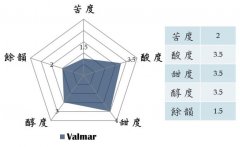
For professional baristas, please follow the coffee workshop (Wechat official account cafe_style) a. Tasting flavor: peach, peanut, cereal flavor radar map: bitterness 1.5 acidity 3.5 sweetness 4 alcohol 3 aftertaste 2 b. Brewing result: this is a very suitable for hand-brewed coffee, the water temperature of about 85 degrees, just can best explain her temperature, just calmly circle note

Introduction to the main Coffee producing areas in the World
Coffee comes from coffee beans, which are harvested and processed from the fruit of trees. Coffee trees grow at the center of the equator, between latitudes of 25 degrees south and north, and are called the homes of tropical or subtropical countries called coffee belts. At present, there are about 60 coffee-producing countries. Coffee is produced in South America, Central America, the West Indies, Asia, Africa, Arabia, the South Pacific and

A brief introduction to the Flavor characteristics of Guatemala Coffee-- Fine Coffee Bean
Such a rich regional flavor should be related to the soil and water in the eight major producing areas of the dangerous country. Among them, the five producing areas of Antigua, Ekat Nango Valley, Attilan, St. Mark and Huaiqiang belong to volcanic geology. In addition, Vivetta Nanguo, Koban and New Oriental producing areas belong to the climate of non-volcanic highlands or tropical rain forests. Guatemala is home to more than 300 microclimates, which can be called the world's.

Introduction of major coffee producing areas in the world Central and South American coffee beans, African coffee beans, Asian coffee beans
[introduction] Coffee comes from coffee beans, which are harvested and processed from the fruit of trees. Coffee trees grow at the center of the equator, between latitudes of 25 degrees south and north, and are called coffee belts in the homes of tropical or subtropical countries. at present, raw coffee comes from coffee beans, which are harvested and processed from the fruits of the trees. Coffee trees grow at the center of the equator.

What is the HIU program? Have you heard of the HIU program?
Professional coffee knowledge exchange More coffee bean information Please pay attention to coffee workshop (Weixin Official Accounts cafe_style) Friends who like fine coffee should have heard of HIU plan or drunk HIU plan coffee. But what is HIU? It's basically a small-farm coffee quality development program. Originator Graciano Cruz based on years of producing coffee classics

Brief introduction of Brazilian Yellow Bourbon Coffee hand Chong French Queen Manor Flavor
A brief introduction to the flavor of Brazilian Yellow Bourbon Coffee hand-washed Queen's Manor Brazil Syrador Yellow Bourbon (Brazil Cerrado Yellow Bourbon): the three major boutique coffee producing areas in Brazil are Syrador, South Minas and Mojiana in the central and western part of Minas province. Brazil's Yellow Bourbon is located in the Hirado region of Brazil. But not all the coffee produced in the prairie of Hirado can be crowned.

Introduction to coffee bean classification: eight classification rules for coffee bean classification
Professional barista exchanges, please pay attention to coffee workshop (Weixin Official Accounts cafe_style) Unfortunately, there is no uniform international standard for coffee quality, but it is graded by several coffee characteristics unique to each country of origin. Most of the grading is based on the appearance of coffee beans (large).
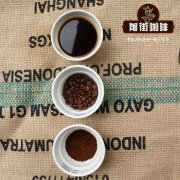
Brief introduction of Coffee Flavor defect Group Aromatic Taint 36 smell bottle
Professional coffee knowledge exchange more coffee bean information please follow the coffee workshop (Wechat official account cafe_style) Aromatic Taint (defect group) (wet): soil Eathy, straw Straw, medicine Medicinal soil: flavor type (Aroma group) earth soil flavor characteristics (Aromatic features of the sample): this is new after heavy rain

Coffee and Science: exploring the Origin and Coffee Flavor from a Chemical Perspective
Professional coffee knowledge exchange more coffee bean information please follow the coffee workshop (Wechat official account cafe_style) where is your favorite coffee producing area? Brazil, Kenya, Ethiopia? Why do you care which country the coffee comes from? There is probably an important reason because the same variety of coffee has different chemicals according to where it grows.